Showing posts with label Sei whale. Show all posts

Friday, 20 January 2023

Meet the sei whale

Say what? Sei whale (Baleanoptera borealis).

The Sei whale - pronounced "say" whale is the world's third largest animal after the blue whale and fin whale. They are not as well known as these two larger species, but are definitely as cool.

The sei whale is a large filter feeding whale species that can grow up to 21 m in length! Sei whales are sleek and slender but often have round pitted scars on their body. These marks are the result of bites from cookie cutter sharks. The cookie cutter marks can even be entire circular holes going right through the dorsal fin of the whales.  


Sei whale surfacing to breathe


Sei whale dorsal fin (with a hole made by a cookie cutter shark)


Sei whale surfacing, showing the characteristic curved top of its rostrum


Two sei whales travelling together

Monday, 11 July 2022

A mix of marine mammals

Off the Azores islands, a variety of marine mammals can be seen. Particularly in the spring, which is the time that the largest number of species can be seen. Following is a small selection of this marine mammal mix, starting with a very rare visitor to the region: 


 Grey seal (Halichoerus grypus) - a very rare visitor to the Azores

 Bottlenose dolphins (Tursiops truncatus)

 Fin whale (Baleanoptera physalus)

 Blue whale (Baleanoptera musculus)

 Sei whale (Baleanoptera borealis)

 Risso's dolphin (Grampus griseus)

Last but definitely not least - a beautiful common dolphin (Delphinus delphis)

Saturday, 4 September 2021

Summer on the ocean

The Azores islands is one of the best places to see a huge range of species of cetaceans (whales and dolphins). In 2014 I encountered 16 different species! Below are some photos of just a few of them:


Bottlenose dolphin (Tursiops truncatus)


Common dolphin (Delphinus delphis)


Pilot whale (Globicephala sp.)


Roseate tern (Sterna dougalii)


Sei whale (Balaenoptera borealis)


Sperm whale (Physeter marchocephalus)


Sperm whales diving


Vila Franca islet

Saturday, 5 December 2020

Baleen whales surfacing

During the spring months there is a peak in baleen whale sightings in the Azores. Their presence at the surface is given away by their blow as they exhale great volumes of air. The three largest species; blue whale, fin whale and sei whale aren't known for putting on great acrobatic displays, but it is very exhilarating in that first moment that you see these great whales coming up to the surface.  


Two fin whales surfacing in unison


Surfacing sequence of a sei whale


The powerful blow of a fin whale


A fin whale in calm water, showing it characteristic white lower jaw on the right side


Fin whale blow


Fin whale dorsal curved high, indicating it is leaving the surface

Wednesday, 18 October 2017

Baleen whale season in the Azores

I started my whale watching experience in the Azores during the spring months, which to my surprise is a great time of the year to see migrating baleen whales. When people talk about whale watching in the Azores you hear a lot about the resident sperm whales. However, these volcanic islands are also one of the best places to see the three largest animals on the planet (blue whales, fin whales and sei whales). I was lucky to to encounter many of these ocean giants during my first whale watching season off São Miguel Island.

Fin whale (Balaenoptera physalis) head


Sei whale (Balaenoptera borealis) mother and calf


Blue whale fluke!


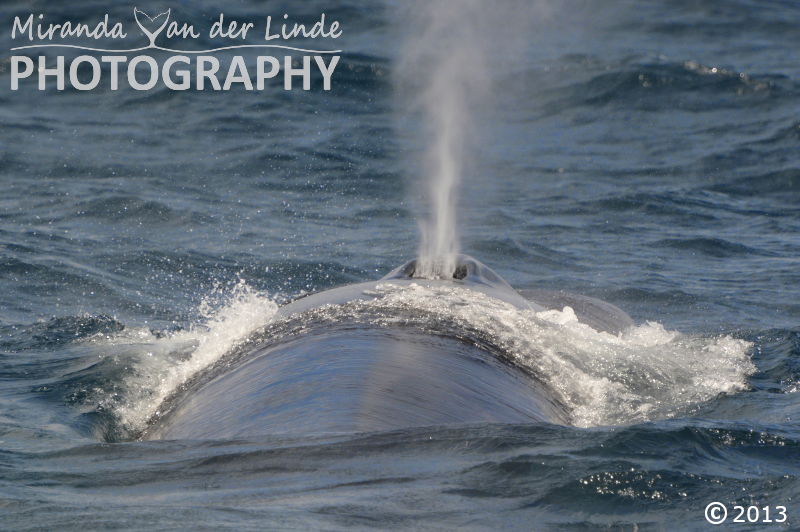
Blue whale (Balaenoptera musculus) tall blow


Blue whale (Balaenoptera musculus)


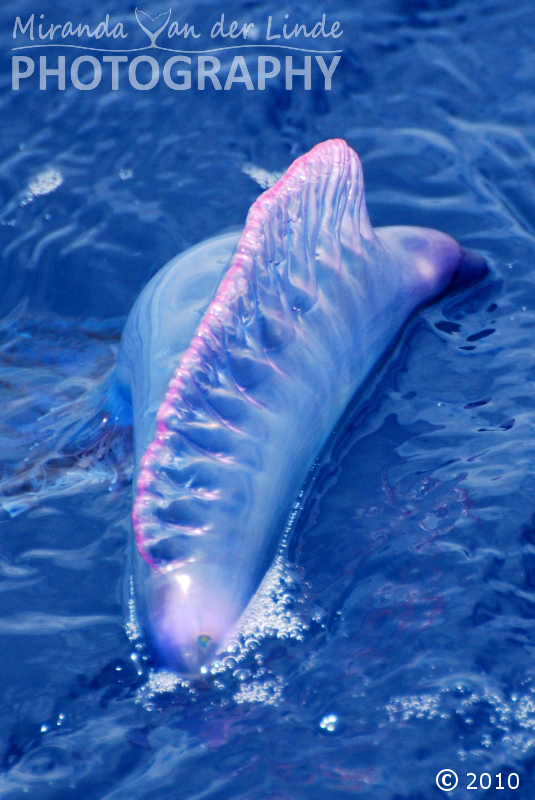
A completely different sort of sighting - a portuguese man of war (physalia physalis)